About terphunter
The Problem
Finding the right cannabis product should not feel like shopping blind. For a long time, that was exactly what it felt like: walk into a dispensary, pick something off a strain name or a recommendation, and hope the label told you enough to make a decent guess.
The strain name tells you almost nothing. Two products both labeled "Blue Dream" can have completely different terpene profiles and effects. What actually matters is what is in the lab report.
Why I Built This
I built terphunter because I got tired of guessing. I kept running into the same wall: dispensary menus are built for browsing, not for understanding what is actually in the product.
I started tracking terpene profiles manually: comparing reports, visiting dispensaries, writing notes, and going back to products that actually worked instead of the ones with the loudest marketing. terphunter started as a way to make that process less messy for me, then turned into a tool other people could use too.
What terphunter Does
terphunter pulls from multiple data sources to build the most complete picture of each product: dispensary menus, lab reports, over 1,500 peer-reviewed medical papers, 5,200+ verified strain profiles, and thousands of real consumer experiences. No single source tells the whole story. We combine them all so you can make better decisions.
TerpAtlas lets you browse and filter products across every dispensary we cover. TerpLab lets you score and rank products by terpene profile, couch lock potential, and strain genetics. Ask Terpie is a full chat with our cannabis intelligence engine (backed by live inventory, lab data, and 1,500+ research papers): ask about any strain, product, price, growing question, or state rule from the Ask Terpie page, the quick-ask bubble on every page, or any product's detail panel in TerpLab. TerpBlender lets you mix strains together to see the combined terpene profile, predicted effects, and couch lock score.
TerpScan turns any cannabis label into an instant report card: snap a photo and get terpene profiles, AI interpretation, couch lock score, and a shareable link. Find Similar matches your scan against in-stock products with similar terpene profiles.
The COA Database lets you browse raw Certificates of Analysis, Market Insights shows aggregate trends across dispensaries, and the Genetics section maps products to their canonical strain lineage.
How We're Different
A lot of cannabis data sites are scrapers: they pull dispensary menus at scale and dump them straight into a database. What you see is what they scraped, nothing more. That's useful for checking a menu, but it doesn't tell you anything the dispensary's own website couldn't.
terphunter is built differently. We don't scrape data into our product database; we scrape it into an extensive research and intelligence layer first. Dispensary data, published medical research, verified strain profiles, and real consumer reviews all feed into the same system. Terpie cross-references every source to build a more complete picture of each product than any single data feed could offer. By the time you see a product on terphunter, it's been enriched with context that no menu scraper can provide.
We also focus on regional depth over national breadth: deep coverage of Michigan, Ohio, and Missouri with every data point we can get per product, rather than thin coverage of the entire country. We'd rather have 33 terpenes, full cannabinoid profiles, COAs, AI analysis, and community feedback for 8,000 products than bare THC percentages for 800,000.
Our data comes from multiple sources (dispensary APIs, lab reports, Certificates of Analysis, over 1,500 peer-reviewed papers from PubMed, 5,200+ verified strain profiles, and thousands of real consumer reviews), layered together to build the most complete picture of each product. Data is structured, normalized, and searchable from ingestion. We don't clean it up after the fact.
We don't link directly to dispensary product pages. We're not a referral site and we don't facilitate transactions. We aggregate and analyze data to help you make better decisions. We track in-stock status, but dispensary menus can lag reality. Always confirm availability before visiting.
Infrastructure runs on owned hardware: a fleet of Raspberry Pi runners on our own network, not rented cloud scrapers. That means our costs scale with hardware purchases, not with per-request cloud bills. terphunter is currently free and self-funded; a Pro tier with API access may fund operations later. No ads, no investors, no data sales. We expand by adding runners, not by adding cost.
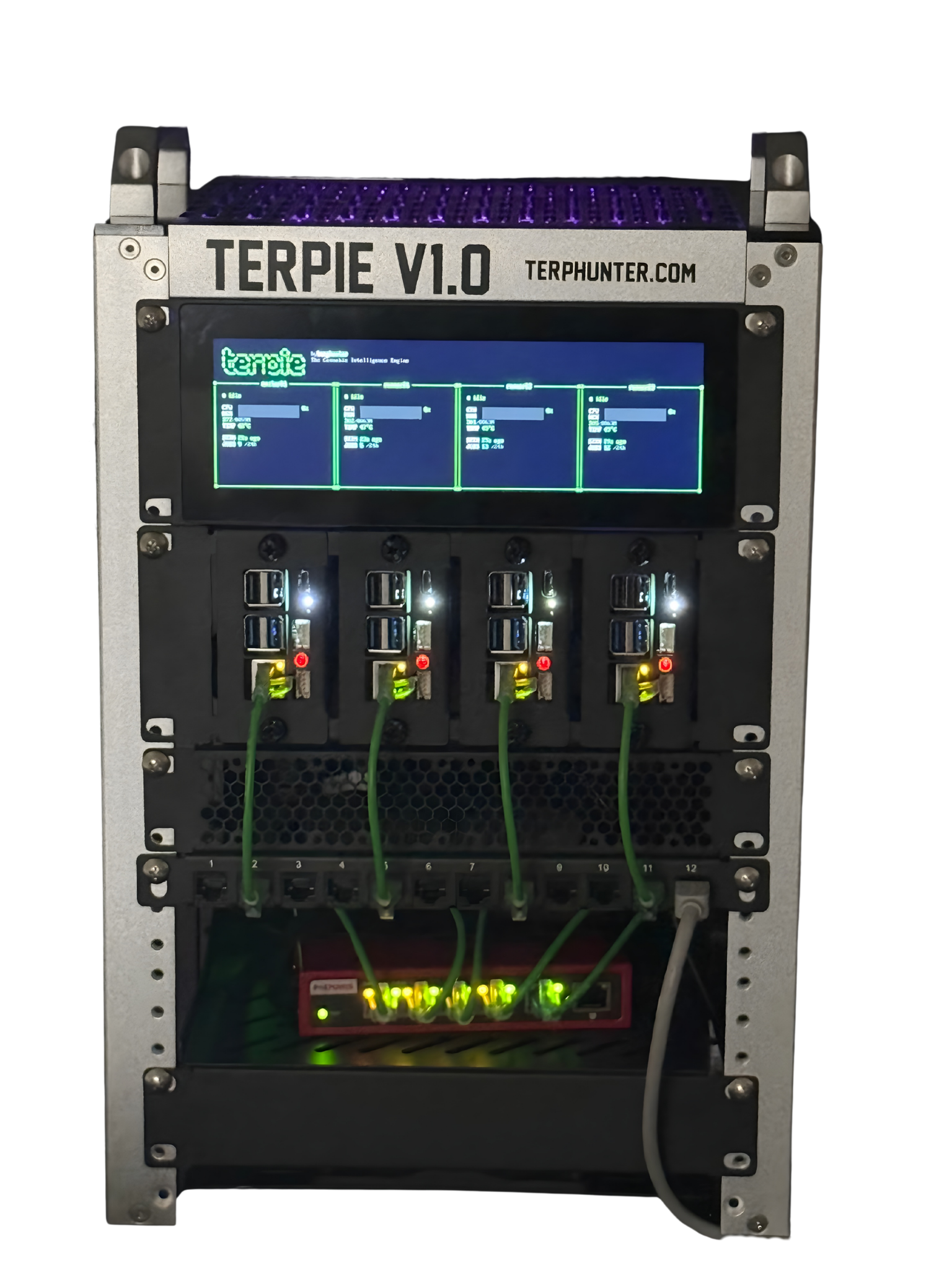
The Terpie fleet: owned hardware, not rented cloud.
Data and Privacy
Product data is aggregated from multiple public sources including dispensary menus, lab reports, and community feedback. We do not sell data, do not run ads, and do not share your information with dispensaries or anyone else.
An account lets us save things that are personal to you: favorites, scan history, alerts, and search profiles across sessions and devices. We only ask for an email and password. The educational guides, market insights, and COA browser are all accessible without logging in. Measured lab data stays separate from our AI-generated interpretation, and we try to be clear about that throughout the product.